









Financial Literacy Month: Understanding Your Debt-to-Income Ratio
04/15/2026
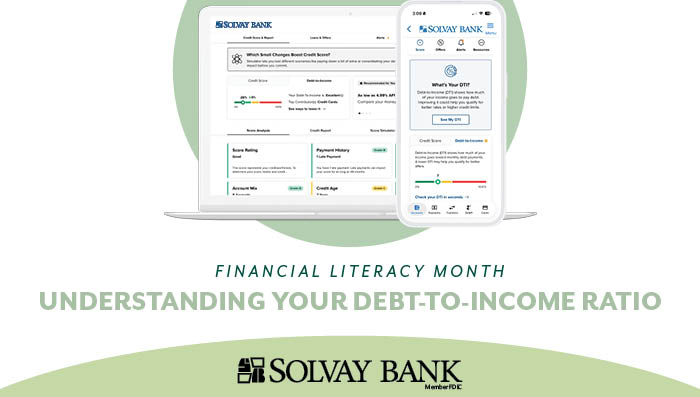
April is Financial Literacy Month, a great time to learn more about managing your money and making smarter financial decisions. One key aspect of being financially savvy is understanding how much debt you’re taking on relative to your income. By knowing your debt-to-income ratio (DTI), you can get a clearer picture of your financial health, make better borrowing decisions, and work toward your financial goals with confidence.
What is Debt-to-Income?
Your DTI shows what percentage of your gross monthly income you’re using to pay debts. This includes things like car loans, housing costs, student loans, and credit card payments. Knowing your DTI helps you see if you’re taking on more debt than you can afford.
How to Calculate Your DTI
It’s easy to find out your DTI:Divide your total monthly debt payments by your gross monthly income. Example: If you pay $2,000 a month on debts and your gross income is $8,000, then: $2,000 ÷ $8,000 = 0.25 or 25% DTI.
Why Does Your DTI Matter?
Your DTI gives a snapshot of how well you’re balancing your debt and income. A high DTI can make it harder to get approved for loans or credit cards, while a lower DTI usually shows you’re in a stronger financial position. When applying for a loan, lenders often look at your DTI to see if you can handle more debt and to decide on the loan amount and interest rate.
DTI Numbers to Know
- 36% and below is considered a good ratio, the lower the better.
- 37-42% is considered manageable, but often advised to watch more closely.
- 43% and above should consider working to lower your DTI for better financial health.
Tips to Lower Your DTI
You have two main options to consider when trying to lower your DTI.
- Lower Your Monthly Debt: Pay down high-interest debt, refinance or consolidate existing debt, and avoid new loans.
- Increase Your Income: Aim to land a higher-paying role, secure a raise or use side gigs.
DTI and Your Credit Score
Unlike credit utilization—which refers to how much of your total credit limit you’re using and does impact your credit score—your DTI does not directly affect your credit score.
However, lenders still examine it closely when deciding whether to approve you for credit, especially for major loans like mortgages. From a lender’s perspective, DTI is often considered the second most important factor in determining your creditworthiness.
Curious About Your DTI?
You can easily check your own debt-to-income ratio with Solvay Bank’s Credit Partner tool, available for FREE inside our digital banking or mobile app. Just input your information in this all-in-one tool to view your credit score, DTI ratio, as well as other personalized recommendations for your situation.
Learn more at solvaybank.com/creditpartner or log into digital banking today to get started!